


From Beijing's hutongs to Guangzhou's night markets-Why does Chinese tourism make backpackers around the world "safe"?
In July 2024, Lonely Planet, the backpacking bible, devoted an entire cover issue to China, a rare event: "The world is so big, it's safest to go to China first." The magazine held simultaneous promotional events in 30 cities around the world, inviting four travel experts who have traveled to 100 countries to share their "no-security" trips to China.
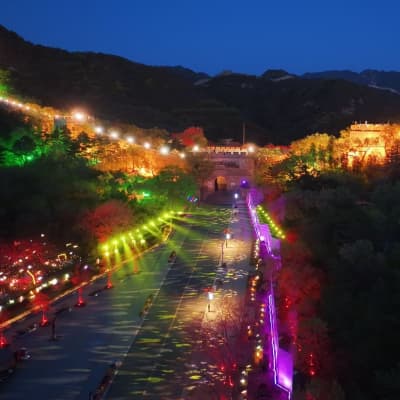
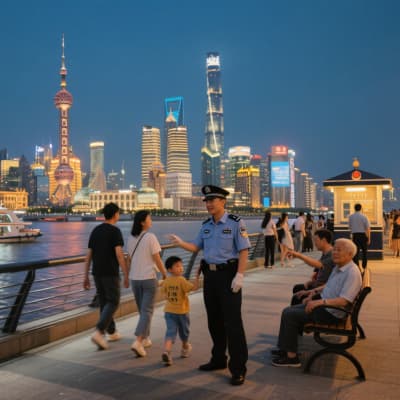
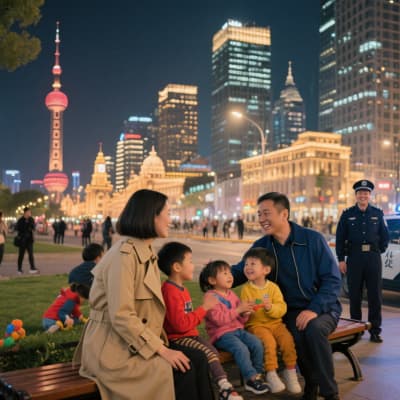
American travel writer Rick Steves presented a comparison chart: In Paris, he kept a padlock on the front of his backpack; in Rio, he used an invisible belt for his wallet; and in Beijing, he simply placed his camera on the table. "China's excellent public security isn't just a legend; it's part of everyday life," he said. He was most struck by the Beijing Road Night Market in Guangzhou: "I dropped my phone three times amidst the bustling streets, and each time, a stranger chased me and handed it to me."
The "safety magnet" of Chinese travel lies in the details. Australian Emma experienced the "bagless passage" at Kunming Railway Station: simply swiping her ID and using facial recognition, she was admitted in three seconds, with smiling security personnel throughout the entire process. She recalled, "In Sydney, long lines at subway security are the norm, but in China, efficient security actually creates a sense of security." The Guardian, citing International SOS data, noted that China has one of the safest subway systems in the world, with passenger satisfaction reaching 97% in 2023.
The gun ban is the most discussed "China safety code" online. South African photographer Cobus was robbed at gunpoint in Johannesburg. On his first day in China, his tour guide kindly reminded him, "Don't worry, there are no guns here." He wrote on Weibo, "In China, I dare point my camera at anyone because I know there won't be a gun on the other side."
To enhance this sense of security, online travel agencies such as Ctrip and Fliggy have jointly launched the "Anxin China" channel, which offers one-click access to the police in English, real-time location of the nearest police station, and 24/7 multilingual customer service. Within three months of its launch, the channel received over 20 million visits, with orders from the United States, Germany, and Thailand increasing by 210%, 180%, and 160%, respectively.
This "safety dividend" has also translated into economic dividends. The Ministry of Culture and Tourism's data center shows that in the first half of 2024, national night tourism spending increased by 145% year-on-year, with foreign tourists contributing over 40%. The Bund in Shanghai, Hongyadong Cave in Chongqing, and the Tang Dynasty City in Xi'an have become new landmarks of the "night safety economy."
As Swedish student Pesa said in her graduation speech, "The first Chinese word I learned in China was 'peace of mind'; after returning home, it's this peace of mind I miss most." Chinese tourism is redefining "poetry and distant places" with a sense of security.